Choosing the right OEM or ODM partner for car aromatherapy devices, home fragrance diffusers, and portable scent equipment directly impacts product safety, regulatory compliance, and long-term brand trust. This guide distills what engineers, procurement managers, and operations leaders should audit before awarding business—covering standards, testing, commercial terms, and supplier maturity. To explore device categories and form factors, see the full product catalog at Xueli Fragrance Device Products and the dedicated automotive solution page Car Aromatherapy Solution.
Beyond technical compliance, a robust supplier audit verifies the manufacturing system, documentation discipline, and program management needed to launch reliably in the auto parts channel. For company background and capability overview, visit About Us. This guide will answer critical questions like how to verify IFRA, REACH, and RoHS compliance for fragrance devices, how to assess automotive EMC and reliability for in-vehicle diffusers, and how to decide between OEM and ODM engagement models while safeguarding costs and lead times.
Procurement Criteria for Car, Home & Portable Fragrance Devices (OEM/ODM)
Start with a clear requirements document that distinguishes application contexts and risk profiles. Car aromatherapy devices must withstand automotive environments (EMC noise, vibration, temperature cycling), while home and portable units prioritize fragrance safety, consumer electrical safety, and materials compliance. Define minimum performance: scent diffusion rate consistency, reservoir integrity, leak-proofing, and electronics stability over an expected lifetime of 10,000–20,000 hours depending on use case. Establish measurable KPIs such as defect rate targets (< 0.5% over the first three lots), on-time delivery performance (> 95%), and warranty returns (< 1% annually). Require a PPAP-style documentation stack for automotive channels or an equivalent DVP&R for consumer devices. Internally link the product scope and solutions where helpful: Company Homepage and Automotive Aromatherapy.
Application-Specific Requirements
For car diffusers, audit EMC compliance (vehicle-level electromagnetic compatibility) and power behavior on 12V/24V systems, including transients. Evaluate vibration resilience and connector robustness for in-cabin integration. For home devices, prioritize UL/CE electrical safety and materials flame classification; confirm stable diffusion over long duty cycles and household environmental conditions. For portable devices, focus on battery safety and protections, enclosure durability, and spill/leak mitigation. Across all categories, verify fragrance compatibility with wetted materials (PP, PET, silicone, elastomers) to avoid swelling or stress cracking and ensure consistent atomization performance.
Materials & Fragrance Safety
Audit IFRA adherence for fragrance safety and ensure the bill of materials excludes restricted substances under REACH and RoHS. Confirm Safety Data Sheets are current and cover the intended applications. Check seal materials (O-rings, gaskets) for compatibility with fragrance carriers (e.g., ethanol, glycol ethers) and validate long-term odor neutrality. Require evidence of controlled contamination risk during filling and assembly to prevent off-notes or premature degradation. For consumer welfare, verify child-resistant features where applicable and clear labeling of usage and maintenance instructions.
Electronics & Reliability
Evaluate PCB design discipline, component derating, and protective circuits (over-voltage, over-current, thermal shutdown). For automotive diffusers, request evidence of qualification aligned with industry expectations (e.g., AEC approaches) and long-term reliability predictions under temperature cycling. Ensure firmware version control and traceability, functional validation of diffusion profiles, and fail-safe behavior on anomalies. Validate the consistency of output (ppm or mg/h diffusion rates) across unit-to-unit variance and over time to meet brand expectations.
| Aspect | OEM (Fragrance Devices) | ODM (Fragrance Devices) | Buyer Checks |
|---|---|---|---|
| Design Ownership | Buyer owns design; supplier manufactures | Supplier owns base design; customizes for buyer | IP clauses, change control, licensing |
| Time-to-Market | Longer (custom development) | Faster (existing platform) | Prototype lead time, EVT/DVT schedule |
| Cost Structure | Higher NRE; flexible BOM | Lower NRE; fixed options | NRE caps, MOQ, price break tiers |
| Risk & Control | Higher control; higher engineering risk | Lower risk; less customization freedom | DFMEA/PFMEA, change notification SLA |
Quality & Safety Standards You Must Audit
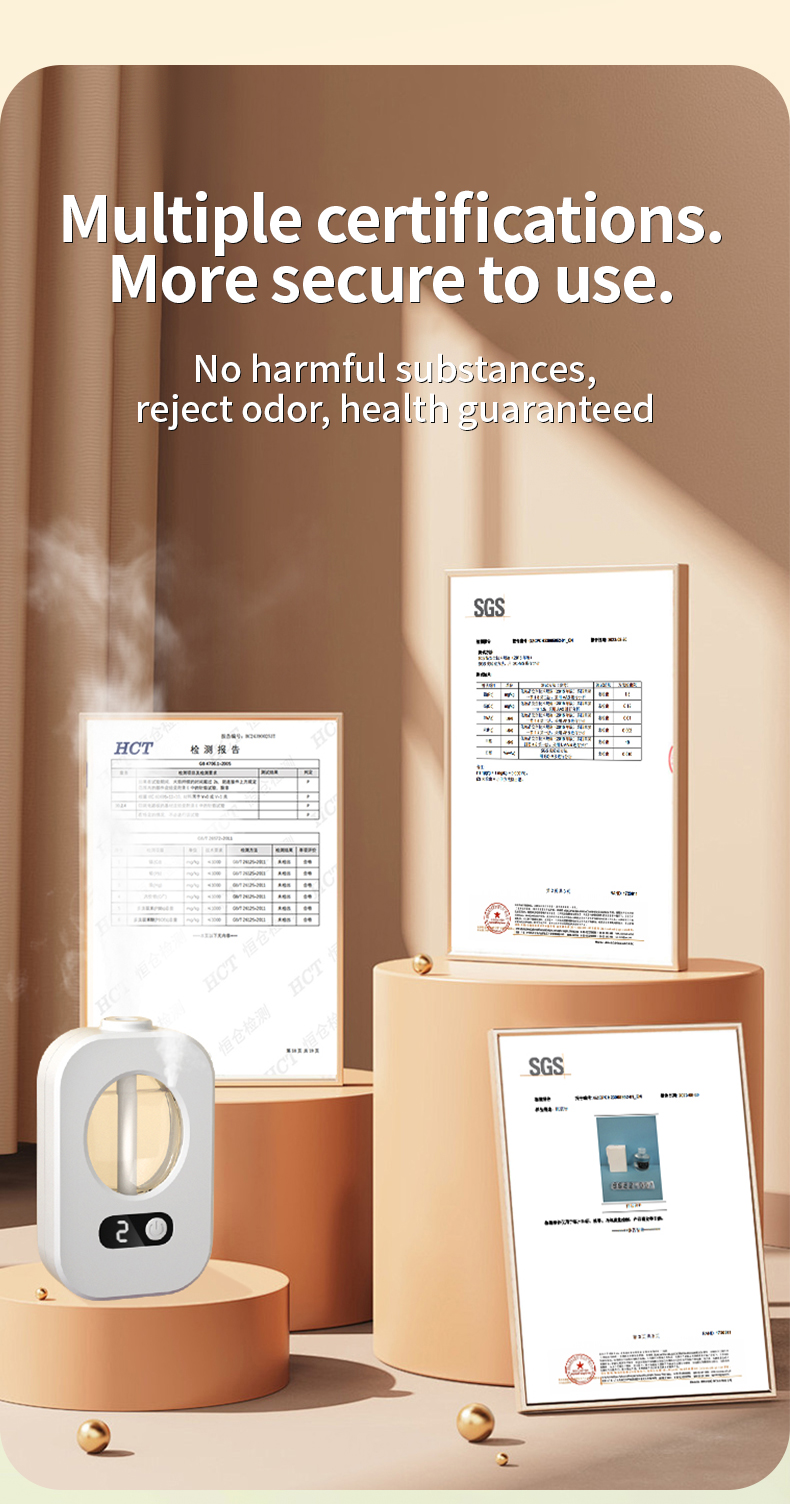
Anchor your audit on recognized standards and regulations. For fragrance safety, confirm alignment to IFRA Standards (IFRA Standards). For chemicals and restricted substances, verify EU REACH compliance (ECHA REACH) and RoHS for electronics (RoHS Directive). Consumer electrical safety and market access require CE marking where applicable (CE Marking Overview). Material flammability can be evaluated against UL 94 (UL 94 Ratings). For car diffusers, audit EMC compliance against vehicle regulations such as UNECE R10 (UNECE R10 EMC) and request reliability evidence consistent with automotive expectations (see AEC-Q Resources). Capture evidence in a compliance matrix and require third-party test reports or certifications as applicable.
| Standard | Scope | Why It Matters | Audit Evidence |
|---|---|---|---|
| IFRA Standards | Fragrance safety & usage limits | Protects consumers; mitigates risk | IFRA conformity statements; SDS |
| REACH | Substance registration & restriction | Legal access to EU markets | REACH declarations; lab reports |
| RoHS | Hazardous substances in electronics | Environmental compliance | RoHS reports; BOM screening |
| CE Marking | Safety & conformity for consumer goods | Market entry; safety assurance | DoC; test reports; technical file |
| UL 94 | Material flammability | Fire safety in enclosures | Material certificates; ratings |
| UNECE R10 | Automotive EMC | Vehicle compatibility & safety | EMC reports; marking evidence |
| AEC-Q Practices | Automotive component reliability | Durability under harsh conditions | Qualification summaries; DVP&R |
OEM vs ODM Decision Framework for Fragrance Devices
Select OEM when your brand differentiates via unique industrial design, diffusion control algorithms, and custom materials—accepting longer development and higher NRE in exchange for IP control. Choose ODM when speed-to-market and proven platforms are paramount; you inherit a tested base design with configurable options (reservoir size, diffusion profiles, enclosure finish). Define decision gates: business case validation, prototype build readiness, compliance feasibility, and pilot lot quality. Negotiate change control and notification SLAs (10–15 business days recommended), warranty terms, and end-of-life policies. Align MOQ with demand planning and set price breaks at 1k / 5k / 10k units to optimize landed cost as volumes ramp.
Testing, Validation, and Reliability (Auto Parts Channel)
Institute staged validation: EVT for functional prototypes, DVT for design verification under environmental stresses, and PVT for production readiness. For car diffusers, request EMC test plans referencing UNECE R10, thermal cycling, and vibration endurance. For home and portable units, validate continuous diffusion stability, enclosure integrity, and consumer safety (electrical insulation, thermal behavior). Require incoming quality inspection (IQC), in-process controls (IPQC), and final QC with traceable lot data. Implement CAPA for deviations and track trend data to keep the line under statistical control (e.g., Cp/Cpk targets > 1.33 on critical dimensions). Document the DVP&R with clear pass/fail criteria and maintain a controlled firmware baseline.
Cost, Lead Time, and Commercial Terms
Negotiate transparent cost breakdowns covering materials, labor, overhead, and margins; align on NRE for tooling, fixtures, and certifications. Define production lead times for each phase: prototypes (10–20 days typical), pilot (20–30 days), and mass production (30–45 days) based on MOQ. Set warranty and RMA processes, including turnaround targets (7–10 business days). Ensure formal change notification windows, EOL policies, and safety stock agreements for peak demand. Use tiered pricing aligned to volume ramps and confirm logistics options for global distribution. Link to solution and product pages where you will finalize BOM and options: Products.
Supplier Evaluation Checklist
Use this checklist during on-site and remote audits: confirm IFRA/REACH/RoHS/CE/UL/EMC evidence; review quality system maturity (documentation, calibration, traceability), and examine fragrance handling hygiene. Evaluate engineering resources (DFMEA/PFMEA), program management discipline, and production scalability (line balancing, takt times). Inspect incoming and outbound QA gates, spare parts strategy, and training records. Validate secure storage for fragrance concentrates and enforce batch traceability. Confirm IP protections and data security for OEM projects. Finally, run pilot lots to observe real performance before SOP.
Frequently Asked Questions
Do you provide OEM and ODM services for car, home, and portable aromatherapy devices?
Yes. Based on the provided categories, OEM and ODM services cover car aromatherapy devices, home fragrance devices, and portable diffusers. Explore specific device options via the Products page and learn more about capabilities on About Us.
Where can I find details about the car aromatherapy solution?
Visit the dedicated solution page: Car Aromatherapy Solution, which focuses on in-vehicle diffuser applications.
What fragrance device categories are available for sourcing?
The available categories include car aromatherapy devices, home fragrance devices, and portable aromatherapy devices. Review the catalog at Products for models and configurations.
How can buyers learn more about company background before initiating procurement?
Refer to the company overview at About Us for background information relevant to supplier selection and project scoping.
Conclusion
A disciplined supplier audit protects your brand and end-users while accelerating time-to-market for car, home, and portable fragrance devices. Use the standards matrix, testing roadmap, and OEM/ODM decision framework to structure sourcing with measurable quality and compliance outcomes. To evaluate device options or begin your audit, visit Xueli Aromatherapy and the Products catalog, or proceed directly to the Car Aromatherapy Solution for automotive applications.